Seeing Double: Capturing Reflections in the Wild
Reflections work because our brains are suckers for order. We crave balance. We like things lining up and in their place. The whole puzzle industry counts on it. Like a completed 1000-piece, a good reflection hits that part of the brain that says, yes, this makes sense.
That is why reflections stop people cold. They feel intentional. They feel calm. They feel like the photographer had a plan, even if the truth is that the wind stopped for ten seconds and you didn’t screw it up.
I like reflections because they reward patience and punish ego. You cannot bully water into cooperating. You cannot outthink ripples. You wait. Or you move on. It is honest work.
Landscape Reflections: Symmetry, Calm, and the Illusion of Control
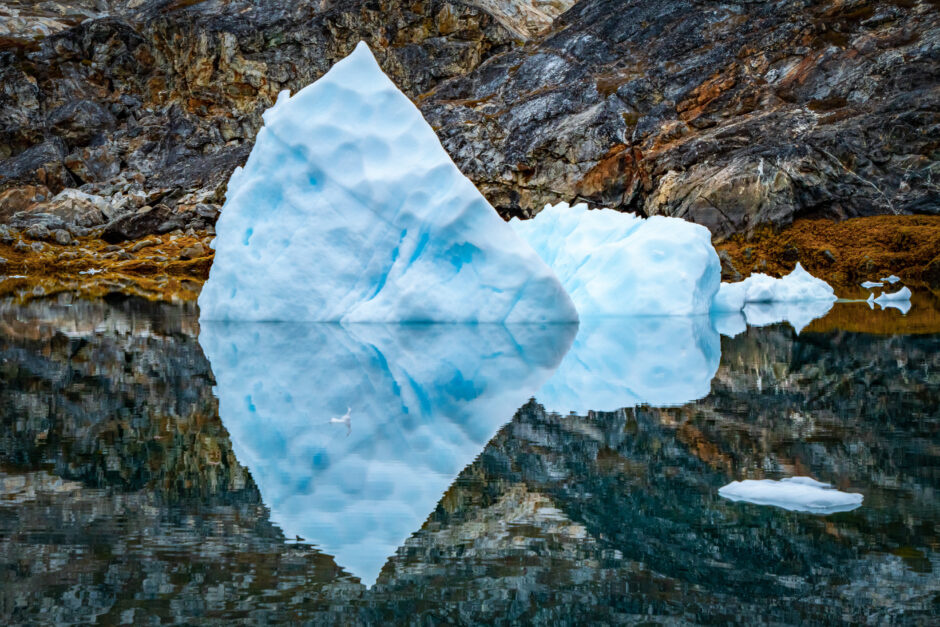
A landscape reflection takes just two basic ingredients: a location and some water. Then like a door-to-door salesman walking down your street, you pray the wind moves on to someone else. Still air is the key as too many ripples in your water will muddy the illusion.
From there, aim to put your “horizon” or where your landscape meets the water in the middle of the frame. A good reflection invokes symmetry and you’ll want to lean into that by giving the watery image the same space as your landscape. Symmetry in landscape reflections work because it gives the viewer a break. The eye sees an image half as complex, relaxes, and trusts the frame. That trust buys you time. They start exploring texture, shape, and detail. They move back and forth from your landscape to your reflection to subconsciously check for similarities and differences; all the while appreciating your capture.
East Greenland (pictured above) is not generous with reflections. When they happen, they feel earned. Icebergs drift. Water heaves. Light changes its mind constantly. But when everything lines up, you get something rare in that wild place: order.
This kind of symmetry demands discipline:
- Keep the camera dead level or the whole illusion collapses. Or zoom out enough so you can level the crop in post.
- Protect highlight detail because blown out images looks amateur fast
Polarizers are a loaded weapon here. Turn them too far and the reflection vanishes, taking the entire point of the photo with it. Back off. Let the watery image exist.
Wildlife Reflections: In-Camera Cloning
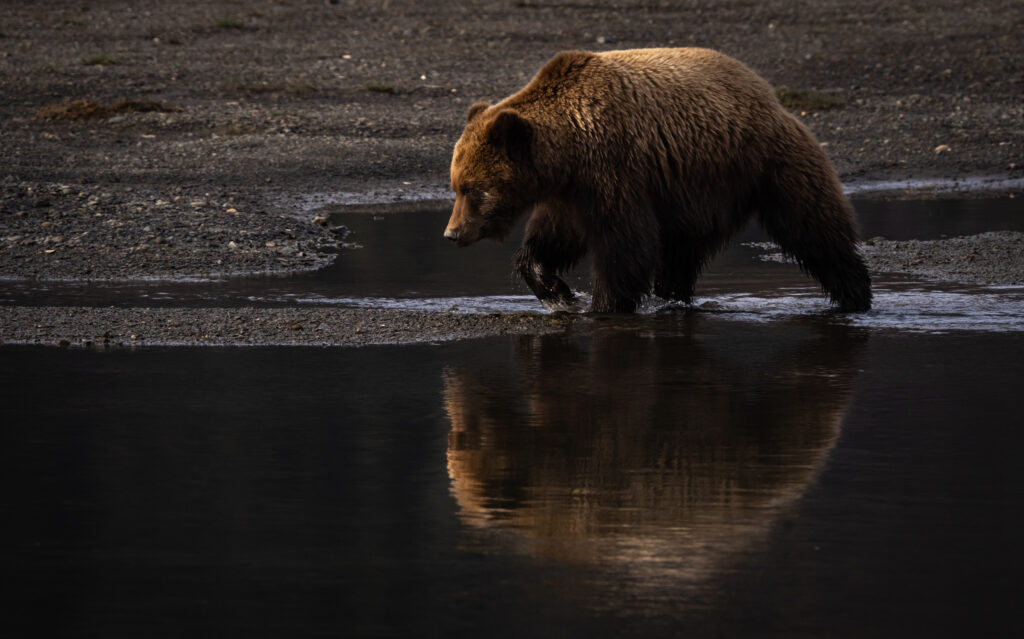
Why have one Alaskan brown bear when you can have two? I think people like wildlife reflections because they require a tricky third ingredient. Unpredictable animals. You need the location, the water, and now an animal close enough to the water to kick an image echo. Luck is involved sure, but you can hedge your bets by getting ahead of the action and aiming for that right moment. If you see still water ahead of your animal’s direction of movement, set-up your scene and wait to see if your subject (and the wind) will cooperate.
Perfect reflections are rare and honestly overrated. They feel photoshopped. A fractured mirror under a bear feels real because it is real. These broken reflections still work because our brains are great at filling in gaps. The viewer does the math without thinking about it.
Your priorities are as follows:
- Shutter speed stays high to freeze the water and your animal
- Watch your camera’s focus point as it might get fooled by a good reflection; you want the real animal sharpest
- Longer lenses create a good bokeh and simplify the reflected mess
- Again, keep your watery horizon level
Composition again is key here. You should treat your cloned reflection like a 2nd subject and compose it as such. Does it have the same amount of head room below as your real animal above? Leaning into the symmetry helps sell your intentionality in capturing its reflection.
And Now for Something a Little Different: Reflections without Symmetry

Accidental Poetry: Images That Feel Smarter Than You Are
Reflections without a duplicated subject and the aforementioned symmetry can work because they feel unplanned. They evoke discovery rather than intentional construction. The viewer senses that you noticed something others walked right past while checking their notifications. The van window above is not supposed to be a framing tool and that’s what makes the image.
Reflections like these show up in a lot of places, not just windows. Mirrors of course, shiny metal like a chrome bumper, or even a puddle in a parking lot can capture your subject. The key here is as little distortion as possible so your subject is readable to your viewer, but still gives them the task of sorting out the reflecting medium.
Technically, keep it simple:
- Get close to the reflecting surface
- Don’t worry too much about dirt and scratches
- Change your angle up/down/left/right until your subject is perfectly framed
- Be intentional with your focal point. Should the reflection be in focus or is the reflecting medium more interesting?
- Watch for your own reflection unless narcissism is the goal
Phones often crush these moments. Small lenses behave better against close mediums. Big cameras tend to overcomplicate a good thing.
Color Reflections: Landscapes Melted Down
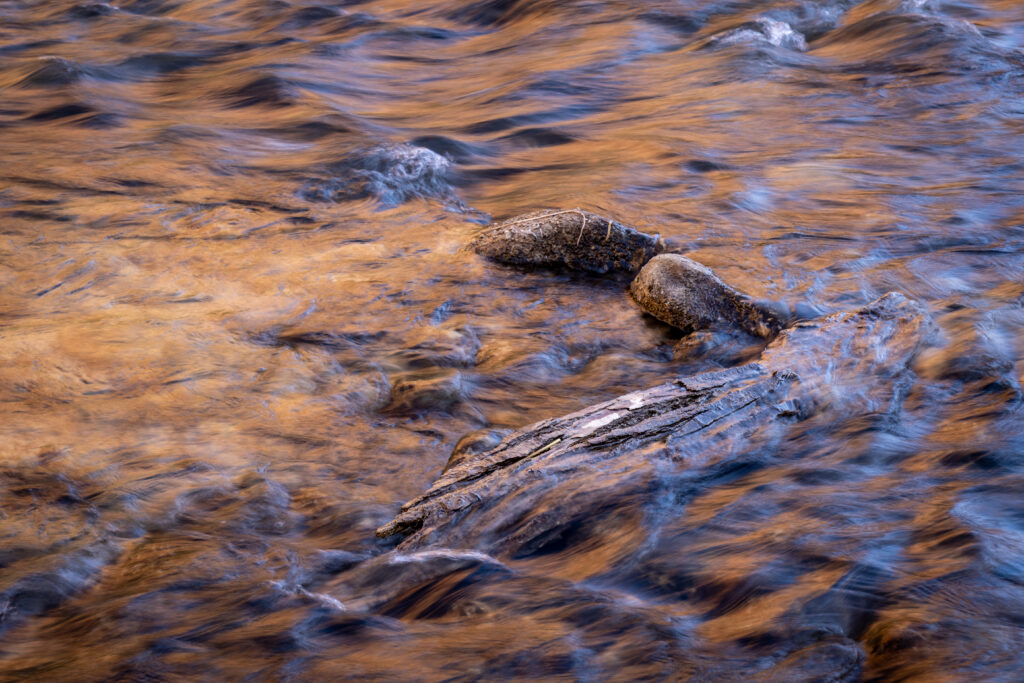
Water is blue, turquoise if you’re lucky (speaking to you, Caribbeans), or more likely some shade of dirty brown. You can override the ugly colors by finding a background with pleasing colors and capturing its reflection in the water. Fall colors, canyon walls, sunset, even a boat’s hull can cast a different hue and add interest to an image of water.
How to rebrand dull water:
- Slow the shutter enough to let the color smear.
- Keep the surface alive with a focal point like a log, rock or even a duck.
- Zoom in tight so you don’t see the reflected background, just its hue in the water.
Zion’s golden canyon walls reflected in the river works because it feels good. No explanation required.
Editing Without Ruining the Magic Trick
Reflections fall apart in post when you get greedy. Too much clarity kills softness. Too much sharpness turns water into plastic. Over-perfection breaks the illusion.
The goal is to support what the brain already wants to believe:
- Soft transitions
- Dominant midtones
- Imperfections left intact
- Symmetrical crops and level horizons
A reflection that looks too clean feels fake. A slightly flawed one feels true.
Why Reflections Are Worth Chasing Anywhere You Go
Reflections are not tied to a place. They are tied to your viewer’s attention.
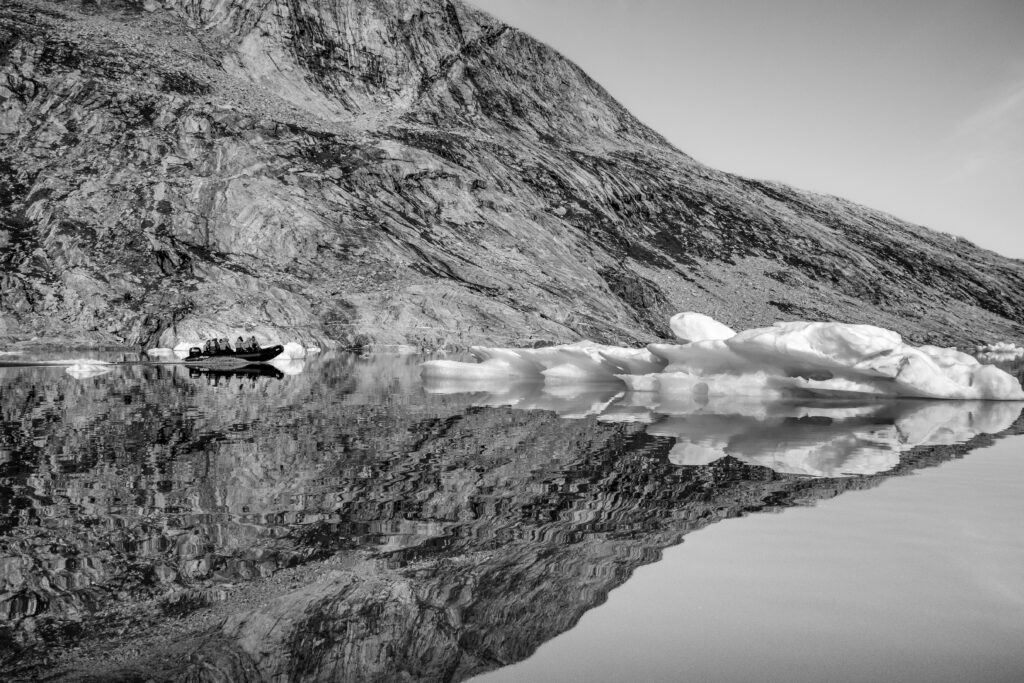
Icebergs just make the lesson obvious, but the same rules apply everywhere. Still water. Glass. Puddles. Polished metal. Reflections show up on every photo trip, whether you are in the Arctic, a desert canyon, or standing next to a muddy roadside pullout wondering if this was a wrong turn.
Viewers respond to reflections because they offer order in the middle of chaos. Symmetry calms the eye. Repetition feels intentional. Even imperfect reflections give the brain something to latch onto, a visual handshake that says, stay here for a second.
For photographers, reflections are a reminder to slow down. To stop chasing obvious subjects and start paying attention to what is happening beneath them, beside them, or quietly behind the glass. They reward patience, curiosity, and restraint. They punish rushing and ego. Fair trade.
On your next photo expedition, do not just look at the landscape. Look for its echo. Watch how light comes back at you.
See what the world is willing to show you twice.
Happy photographing,


Leave a reply