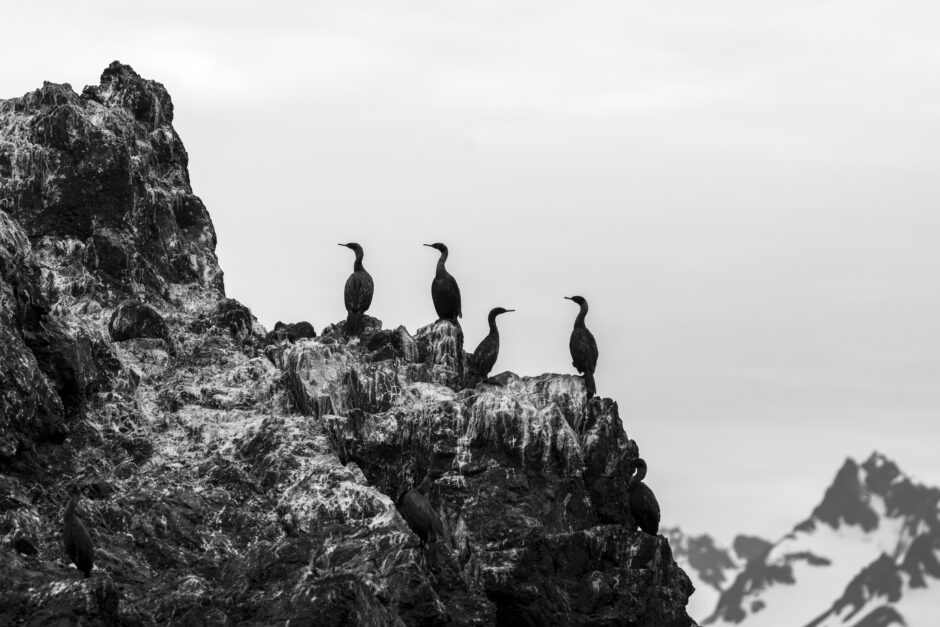
Your Wildlife Photos Need Less Wildlife: A Guide to Animal-scapes
There’s a dangerous moment in wildlife photography. You spot the animal. Adrenaline kicks in. Your hand grabs the zoom ring and your brain delivers one very clear instruction: MAKE ANIMAL BIG.
So you zoom. And zoom. And zoom some more.
Eventually you’ve got a photograph consisting of approximately 93% eyeball, fur and whiskers. Congratulations. You have successfully proven that your telephoto lens works.
Don’t get me wrong, I love a tight wildlife portrait as much as anyone, but somewhere along the way, wildlife photography became obsessed with filling the frame. We judge encounters by how close we got. We judge lenses by how much reach they have. We judge photos by whether we can count individual eyelashes on a bear standing 70 yards away.
But on a wildlife photo expedition through places like Alaska, the Galapagos or Australia, the animal is only part of what makes the experience extraordinary. The mountains, tundra, lava, desert, forest and weather are part of the story too.
And let’s be honest, if you can’t zoom in 1000%, what are you to do? Lean into the equipment and circumstances you have and still make art with…
Animal + Landscape = Animal-scape. Complicated Stuff.
Sometimes the best wildlife photograph needs less wildlife. Enter the animal-scape; essentially a landscape photograph that happens to contain wildlife.
Instead of making the animal dominate the frame, you deliberately pull back and allow the surrounding habitat to become an important part of the composition. The animal may occupy half the frame. Or a quarter. Or five percent.
That can feel deeply uncomfortable when you’re carrying a lens capable of photographing a lion’s dental work from another ZIP code. But showing habitat transforms what a wildlife photograph communicates.
A tight portrait tells us what the animal looks like.
An animal-scape tells us where and how it lives.
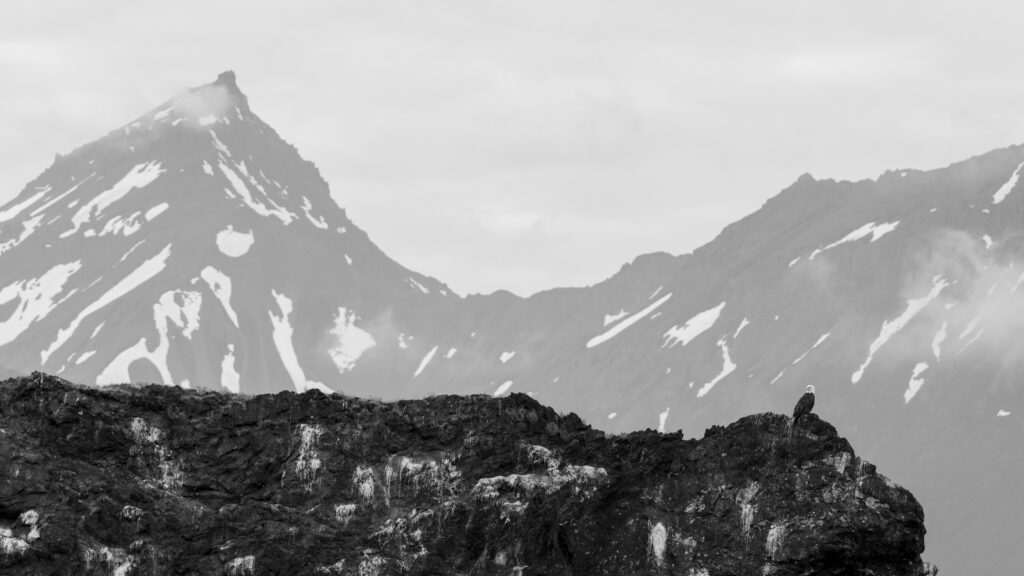
Consider a bald eagle photographed tightly on an Alaskan shoreline. Dark body feathers. White head. Bright yellow bill. Maybe some nice water droplets. Lovely bird portrait. Now zoom out and put that same bird against an enormous Alaskan mountain. Suddenly the photograph says something different. We see a North American icon occupying this absurdly gigantic northern landscape. The mountain establishes scale. The habitat establishes place. The eagle becomes the character that leads us into the scene.
Neither photograph is inherently better; they’re simply telling different stories. And when you’re trying to bring home a collection of photographs that communicates what a destination actually felt like, you need both.
Habitat Isn’t the Stuff Behind the Animal
Wildlife photographers can develop a mildly unhealthy relationship with backgrounds. We want them smooth…clean…distant. Preferably transformed by a 600mm lens and wide aperture into a buttery puddle of expensive-looking bokeh.
There’s good reason for this. A clean background separates your subject and removes distractions. But eventually we can become so good at eliminating habitat that a photograph could have been made almost anywhere.
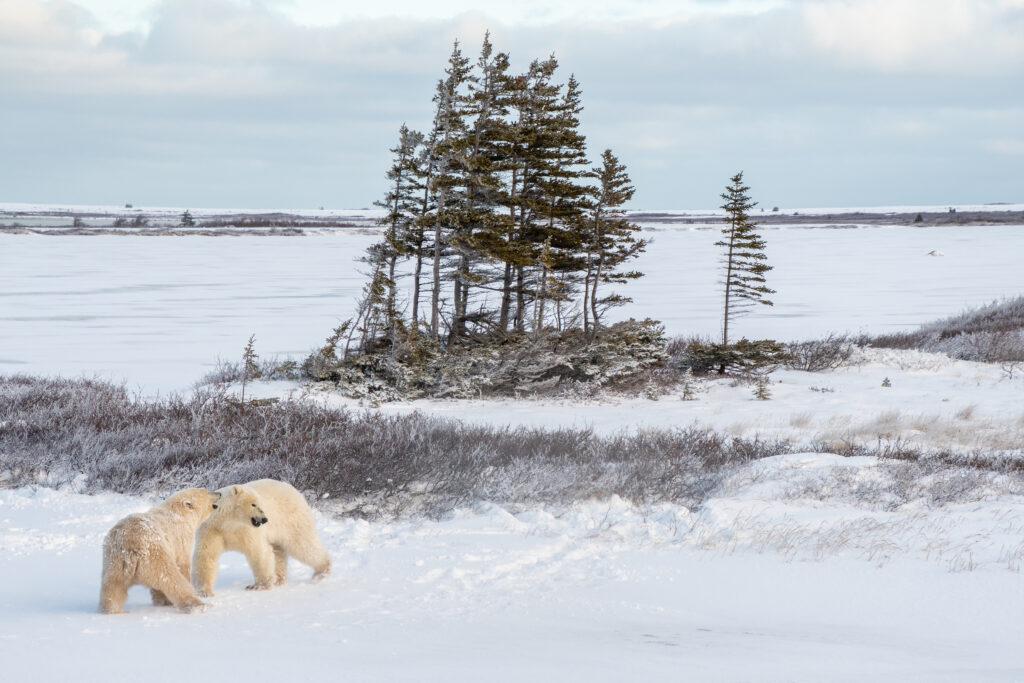
Put a polar bear against creamy white bokeh and you have a beautiful bear. Put a polar bear low in the frame with miles of Churchill tundra stretching behind it and now you have a polar bear in the Arctic.
That distinction matters. The landscape explains the animal.
The emptiness of the tundra helps us understand the bear’s camouflage. The sparse vegetation tells us something about the ecosystem. Snow, sky and horizon create a sense of exposure that a portrait can’t communicate.
This is where animal-scapes start overlapping with negative space. Empty snow, sky, water and rock aren’t wasted pixels. They create scale, isolation and breathing room around a subject. Your job isn’t to eliminate the environment. It’s to organize it.
Make the Animal Small, Not Invisible
Of course, there is a limit. Zoom out too far and wildlife photography becomes a real life Where’s Waldo puzzle. The animal still needs enough visual weight to register. That doesn’t necessarily mean it needs to be large. Contrast, color, shape and positioning can make a tiny subject surprisingly powerful.
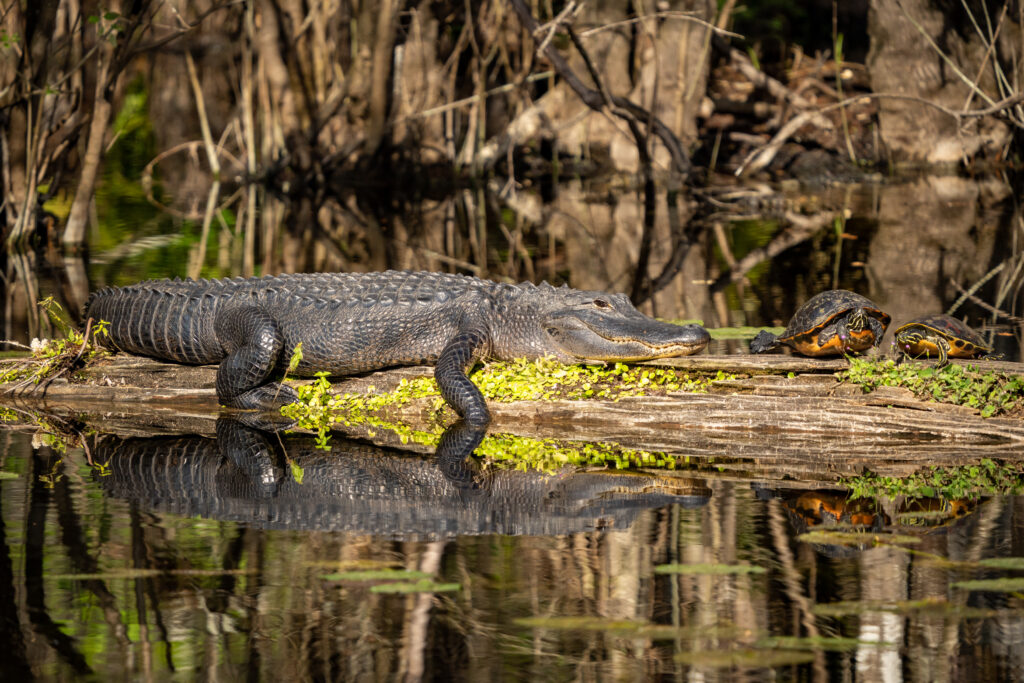
Take an alligator in a Florida swamp. A tight photograph gives you scales, teeth and the ancient reptilian stare of an animal that has survived millions of years largely by refusing to evolve a pleasant personality. Great. But pull back.
Now surround that alligator with dark water, cypress trunks, reflections, vegetation and whatever primordial green muck Florida has been brewing since the Cretaceous. The alligator may become smaller, but the story becomes bigger.
The trick is making sure your viewer can still find it.
Look for contrast between the animal and its surroundings. A dark animal against bright water. A pale bird against darker tundra. And watch your edges. Branches, rocks and horizon lines intersecting your subject can make a small animal disappear surprisingly quickly. When the animal occupies less of the frame, clean separation becomes even more important. A few steps left, right, higher or lower can dramatically improve that relationship between subject and background.
Small is good. Camouflaged into photographic oblivion is less good.
Let the Habitat Explain the Animal
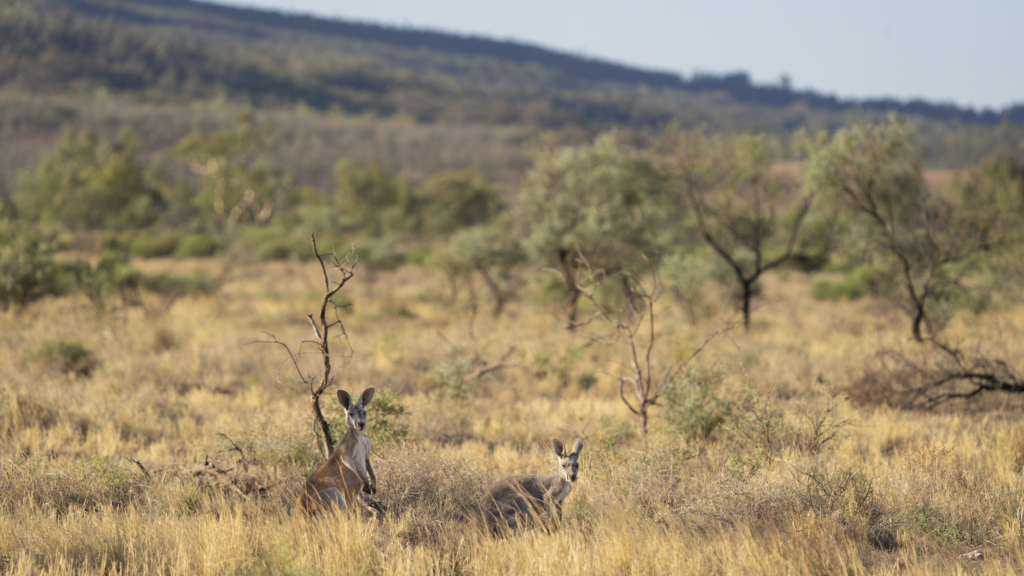
One of my favorite things about animal-scapes is that they can reveal adaptations without requiring a biology lecture. Consider a red kangaroo in the Australian Outback. Photograph it tightly and you see the kangaroo: powerful hind legs, enormous feet, upright posture and that unmistakable face. Pull back and suddenly the red kangaroo makes sense. The red dirt, sparse vegetation and vast open country provide ecological context. Even its coloration begins to feel connected to the landscape.
The same thing happens with Galapagos iguanas.

Close up, it’s an absolutely magnificent little beasty. Scales, claws, prehistoric face. If dragons had given up pillaging medieval villages and moved somewhere tropical to eat cactus and algae, this is roughly where evolution would have landed. But include the surrounding volcanic landscape and the image becomes much more distinctly Galapagos. Black lava. Dry vegetation. Open terrain. An iguana sitting in the middle of all of it looking like it personally remembers when the island erupted.
Now we’re not merely documenting the species. We’re documenting the relationship between species and place. That is one of the great opportunities animal-scapes can give us in travel photography. A photograph can show people not only what an animal looks like, but what its world looks like.
Scale: Make Mountains Feel Like Mountains
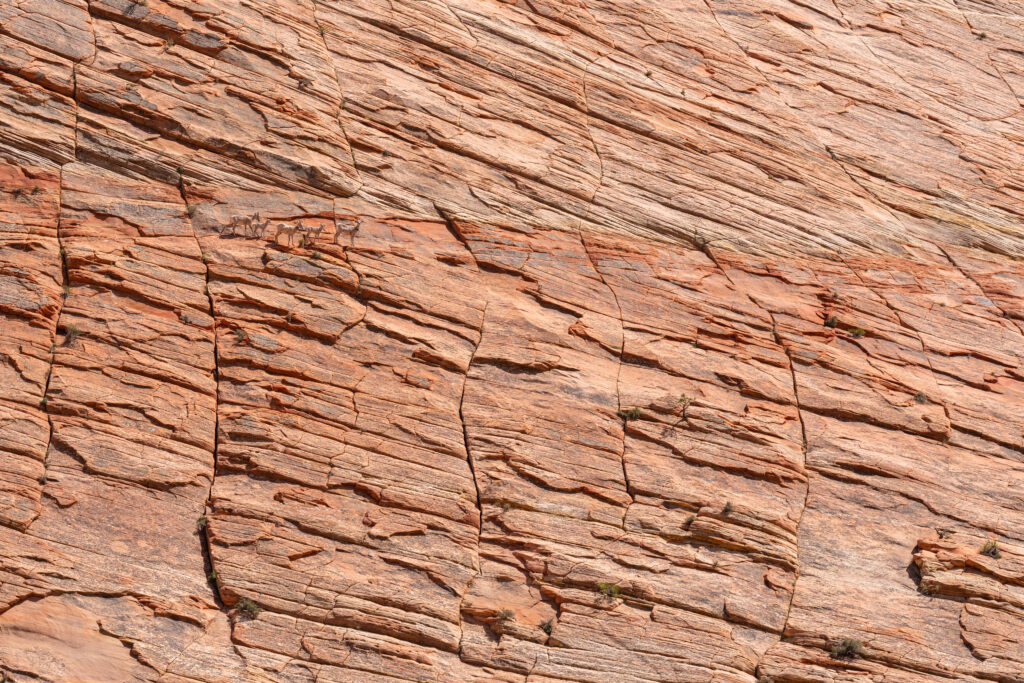
There’s another sneaky advantage to putting wildlife into landscapes. Animals provide scale. A photograph of a sandstone mountainside can be beautiful, but without a recognizable object, our brains aren’t always particularly good at understanding its size.
Drop a desert bighorn sheep into that landscape and suddenly everything clicks. The sheep becomes a measuring stick. Photograph a bighorn tightly against the sandstone of Zion National Park and you’ve made a wildlife portrait. Pull back until that same sheep becomes a small figure traversing an enormous wall of rock and you’ve made a photograph about scale, terrain and survival.
Now the mountainside feels steeper. The cliffs feel bigger. And the sheep somehow become more impressive by becoming smaller.
That last part sounds contradictory, but it’s one of the great tricks of environmental wildlife photography. Making an animal physically smaller in the frame can make its story feel larger.
Your 600mm Lens Can Still Come to the Party
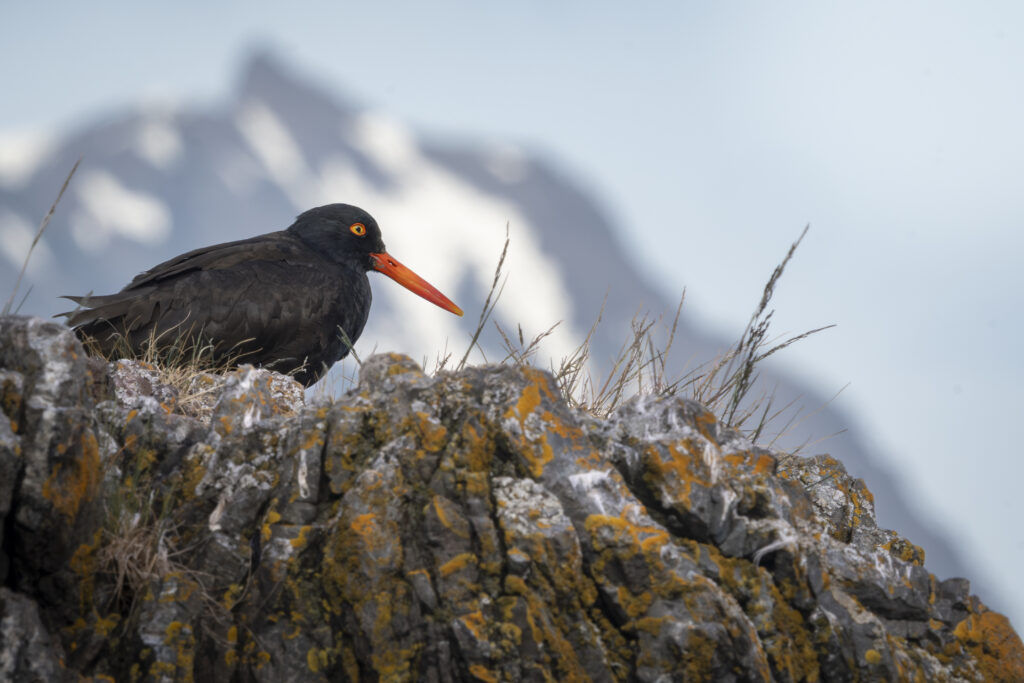
Animal-scapes don’t necessarily mean reaching for your widest lens. In fact, telephoto lenses are fantastic landscape tools. A long lens compresses distance, allowing you to stack an animal against mountains, ridges, dunes, glaciers or layered vegetation. Instead of photographing the entire landscape, you can extract a smaller piece of it and arrange those layers around your subject.
This black oystercatcher with an Alaskan mountain behind it might still be photographed at 300mm, 400mm or beyond. You’re simply making a different compositional decision.
Instead of asking: “How large can I make the bird?” Ask: “How much landscape does this photograph need?”
That is a much more useful question. Your zoom ring isn’t simply a magnification control. It’s a storytelling control. Zoom in and you’re telling the viewer, “look at this animal.” Zoom out and you’re saying, “look at this animal’s world.” Use both.

Stop Chasing the Animal and Build the Scene
One of the easiest ways to make better animal-scapes is to stop reacting to wildlife and start anticipating it. When photographers see an animal, there’s a natural tendency to track it around with the camera. Wherever the animal goes, the lens follows. Instead, look ahead.
Find the photograph before the animal arrives. Maybe a pronghorn is slowly wandering through a charismatic hillside of sage and grass. Maybe there’s a clean stretch of mudflat in front of your brown bear. Maybe your Galapagos Sea lion is moving toward a sun-kissed patch of white sand backed by distant lava hills. Compose the scene and wait.
This approach is very similar to previsualization: deciding what the photograph could become before the moment actually happens. A shot list can establish the idea before a trip, while watching behavior in the field lets you refine it in real time. Suddenly you aren’t chasing wildlife around the viewfinder. You’re waiting for the wildlife to complete your composition. That’s a small mental change and a huge photographic one.
Conclusion: Give Wildlife Some Breathing Room
Some of my favorite places to photograph wildlife—Alaska, Churchill, Australia and the Galapagos—have something important in common: the habitat is every bit as extraordinary as the animals living in it. That’s why Nat Hab’s photo expeditions offer more than opportunities to make portraits. They put photographers in landscapes where wildlife and habitat belong in the same frame.
So yes, when that polar bear appears, take the portrait. Then resist the gravitational pull of your zoom ring. Back out. Look around. Make another photograph.
Because sometimes the best way to make wildlife more important in your image is to make the wildlife smaller.
Happy photographing,

Leave a reply