How I Got This Shot: Tiny Owl, Big Science
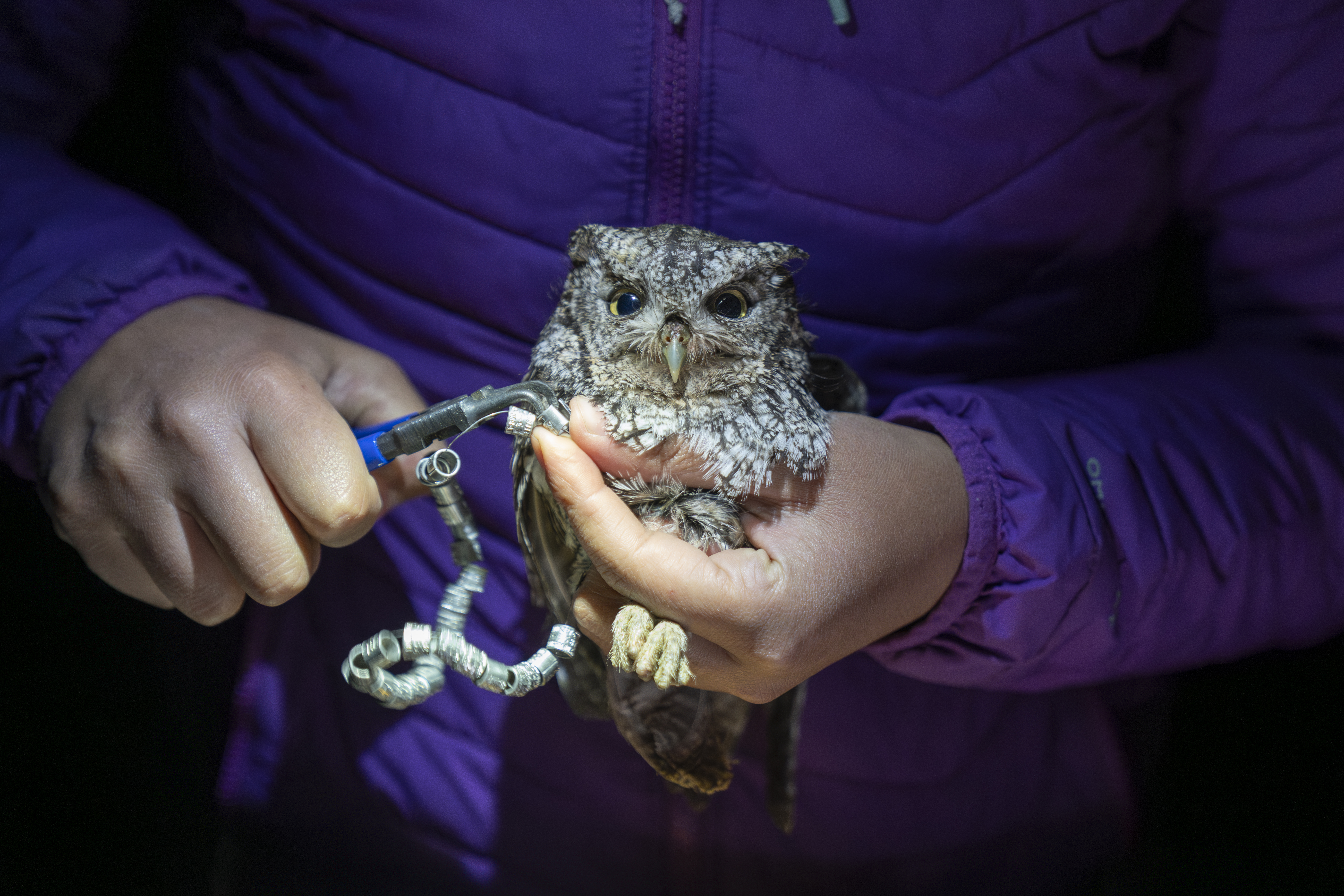
Deep in Arizona’s Chiricahua Mountains, the forest comes alive after dark. While most sensible people are tucked into bed, scientists are wandering through the woods listening for tiny owls that most people will never see. That’s where I photographed this Whiskered Screech-Owl, a pint-sized predator with enormous eyes and an expression suggesting it was deeply unimpressed with everyone involved.
But this wasn’t your typical wildlife encounter. The owl was being carefully handled during scientific fieldwork, and my job was to document the research without getting in the way. It was a rare opportunity to photograph a normally elusive bird up close while telling a bigger story about conservation.
The Science Behind Those Judgmental Eyes
Forest owls are notoriously difficult to study. They’re small, nocturnal, and often nest in tree cavities quite high above the forest floor. Researchers in Arizona monitor these birds to better understand their populations, breeding success, habitat requirements, and responses to changing environmental conditions.
Depending on the research, scientists may capture, measure, weigh, and band individual owls before releasing them. Photographs can document identifying features, physical condition, and the research process itself. And unlike most wildlife photography, where a massive telephoto lens is your best friend, working alongside researchers can put you surprisingly close to your subject.
Camera Settings: Embracing the Darkness
For this image, I used:
- Camera: Sony Alpha 1 Mirrorless
- Lens: Sony 24–70mm f/2.8
- Focal Length: 66mm
- Aperture: f/2.8
- Shutter Speed: 1/15 sec
- ISO: 3200
- Lighting: Headlamp
That shutter speed should immediately raise eyebrows. Shooting handheld at 1/15 second is a fantastic way to build a collection of blurry photographs.
Fortunately, I had three things working in my favor. First, the owl was relatively stationary while being examined. Second, a headlamp provided additional illumination in the otherwise dark forest. And third, I used steady hands and a very high burst mode to increase my chances of capturing a “sharp enough” frame.
I tucked my elbows in, kept the camera steady, and fired a short burst. At this shutter speed, even the slightest movement can ruin an image, so capturing numerous frames gave me better odds. The wide f/2.8 aperture helped gather as much light as possible, while ISO 3200 made the exposure workable. I prioritized the owl’s eyes for focus, letting the researcher’s purple jacket provide an unexpectedly colorful background.
Sometimes your best photography accessory is someone else’s fashion choice.
Ethics: Science First, Photography Second
Research photography comes with responsibilities. These animals aren’t props, and capturing or handling wildlife in this manner should only happen as part of authorized scientific work. My rules are simple: Follow the researchers’ instructions, use only approved lighting, and work quickly. Photograph during the normal examination rather than extending it. If the researchers need you to stop, you stop. And always explain the scientific context when publishing photographs of wildlife being handled.
The owl’s welfare matters more than your portfolio.
Want to Photograph for Science?
You don’t need to be a professional photographer to contribute. Reach out to university biology departments, bird observatories, wildlife research stations, or conservation organizations. Introduce yourself, share a small portfolio, and ask whether they need volunteer photography support. Offer something genuinely useful: research documentation, habitat photographs, educational imagery, or visual storytelling for outreach and fundraising. Discuss image permissions, sensitive location data, and field protocols beforehand. And remember, volunteering might mean photographing equipment and researchers rather than getting intimate portraits of adorable owls.
Science isn’t always glamorous. Sometimes it’s spreadsheets and mosquito bites.
The Bigger Picture
One of my favorite things about the Earthwatch Expeditions: Close Encounters with Forest Owls experience is the opportunity to see conservation research firsthand in the Chiricahua Mountains. You aren’t simply observing wildlife. You’re contributing to our understanding of it. And sometimes, along the way, you get a remarkable photograph of a tiny owl staring straight into your soul.
Happy Photographing,

Mike Hillman
Leave a reply