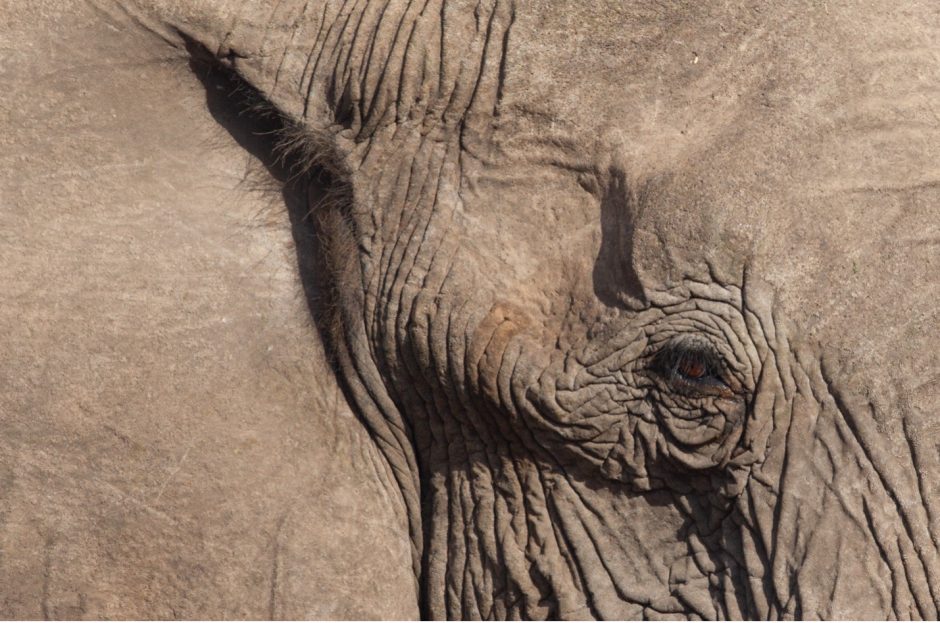
How to Get this Shot – Eye of the Elephant
There’s something special about elephants and we all know it. We connect with them on a deeper level and nothing takes you even deeper than focusing on the eye and showcasing it in your photography. In today’s article, I’ll give you the simple but effective tips and techniques for nailing a filling-the-frame style photo of an elephants eye for maximum impact!
Getting within the Right Range
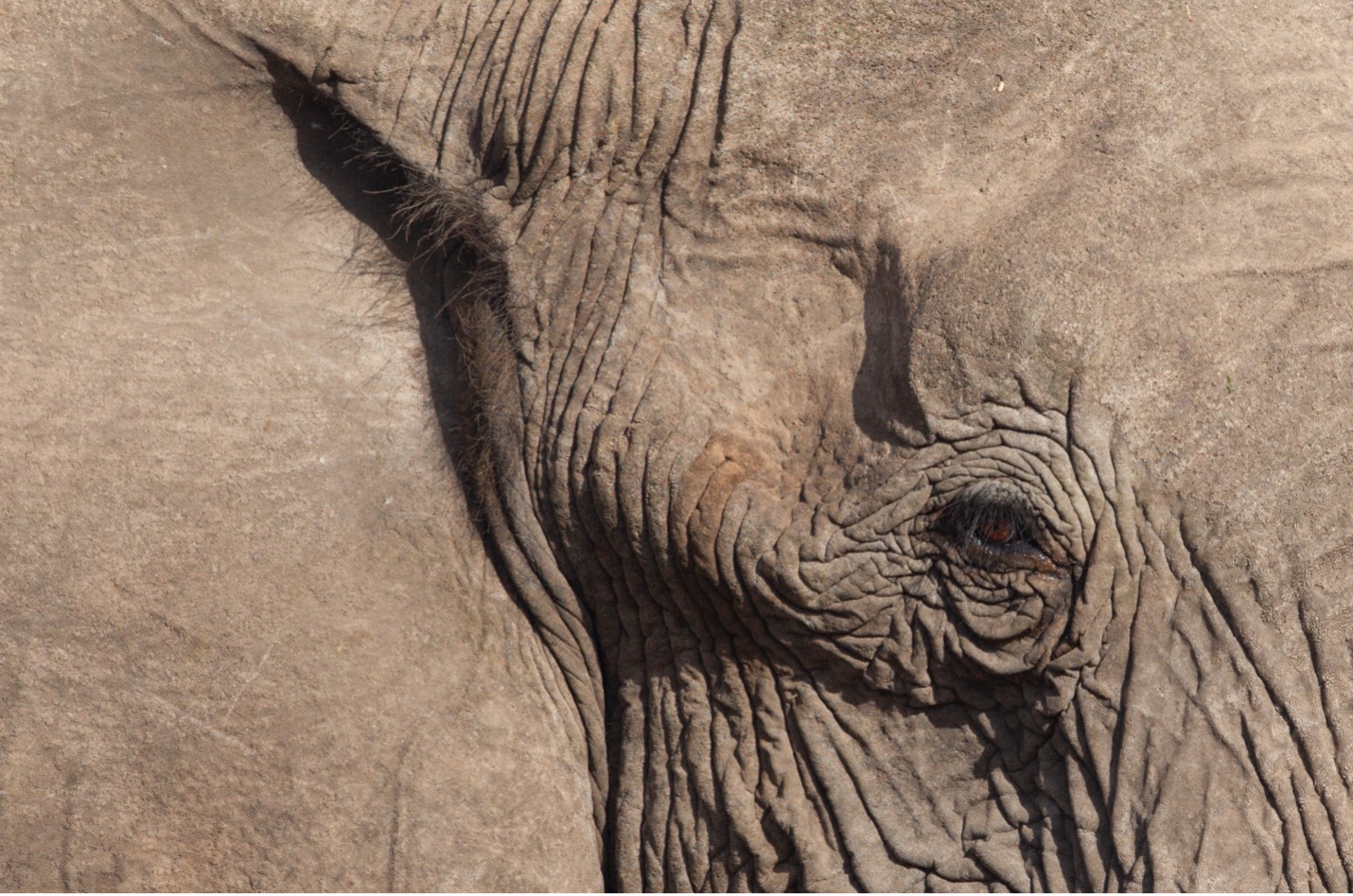
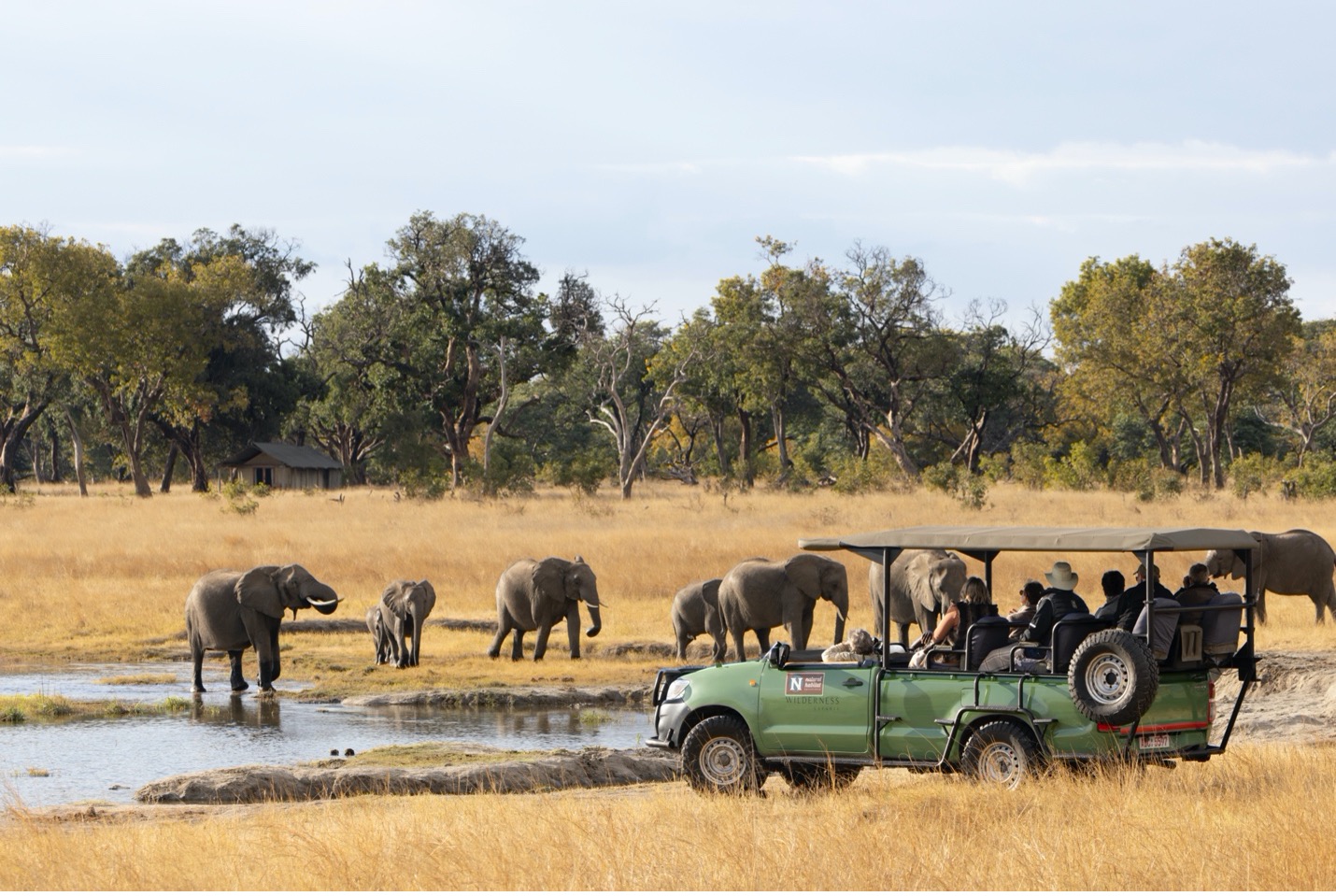
Although elephants are big critters, we still have to set ourselves up for success by being relatively close to the elephant. Fortunately, in places like Botswana, where 60 to 70 thousand elephants roam wild and free, and have no care in the world about vehicles and photographers, this is highly achievable. In addition, because of Botswana’s remarkable conservation and protected area network, you are able to roam free yourself and get within the right range of something less than, say, 30 yards or meters.
We of course never approach an elephant that seems stressed or exhibiting signs that it doesn’t want us there, but again, through the fantastic efforts of Botswana’s park rangers and conservation travel experts, showcasing their beauty at responsibly close range is easier than you think!
Having the Right Telephoto or Zoom
What I’ve found is that the more telephoto or zoom you have isn’t always better. While an 800mm or 30x zoom could get you in close no matter the distance from you to the animal, you have to content with heat shimmer and general atmosphere. Thus, the trick here isn’t the biggest lens possible.
To me, a 400mm or 500mm lens usually does the trick just fine. And if you are photographing on a nicer camera (with a nicer lens) you can always crop in a bit to “get in closer” to the elephant after the photo is taken–on the computer.
The Right Camera Settings
This is the part that often throws people off, whether they are shooting on a big fancy mirrorless or DSLR or a point and shoot camera. To achieve proper focus across the frame, you really ought to be shooting at f/8 or greater. It seems like overkill, because it’s “just an eye” but the reality is that you are using the elephant’s eye and surrounding skin and face as your complete scene. It’s like taking a landscape photo where you want everything in focus. Although and elephant’s eye isn’t as big as an entire landscape, it does take up the commensurate amount of your camera’s frame (and sensor).
Thus, I always play it safe and go for a smaller aperture, aka bigger f/number like f/8. And when I have enough light, I’ll even go for f/9 or perhaps f/11 to really accentuate the texture and definition.
As an aside, photographing just parts of an animal is a great thing to do at mid-day, or anytime when the light starts to become harsh. While top-down, strong, mid-day lighting can be challenging for landscape and general wildlife photography, you are given quite a bit of forgiveness when only concentrating on a part of the animal, as the shadows and highlights are less of an issue.
Keep Traditional or Creative Composition
Just because you’re zeroed in on a small part of an animal doesn’t mean that composition isn’t king! Again, treat this “small scene” like landscape photography and look for things like leading lines, rule of thirds, framing, or any other creative technique you typically use for composing your images.
A common pitfall for these types of images is that people think the scene is either simple enough or powerful enough to ignore great composition. Think about how you can position the creases, the shadows, the lines, and the eye in a creative way to draw the viewer in!
If needed (and I do recommend), take multiple photos at different telephoto lengths (i.e., zooms) and compositions. Zoom out a little to give yourself leeway to re-compose in lightroom.
At the end of the day…
A compelling elephant-eye photo is less about having the biggest lens and more about getting into the right position, using enough depth of field, and paying attention to composition. When all those pieces come together, you’re not just photographing an eye–you’re capturing the texture, character, and perhaps even the intensity that make elephants so extraordinary.
So next time you are in an epic safari photography destination like Botswana, and have a close encounter with one of these giants, zoom in, slow down, and see just how much of the story you can fit into a single eye.
Go out there and give it a shot!
Court
Leave a reply