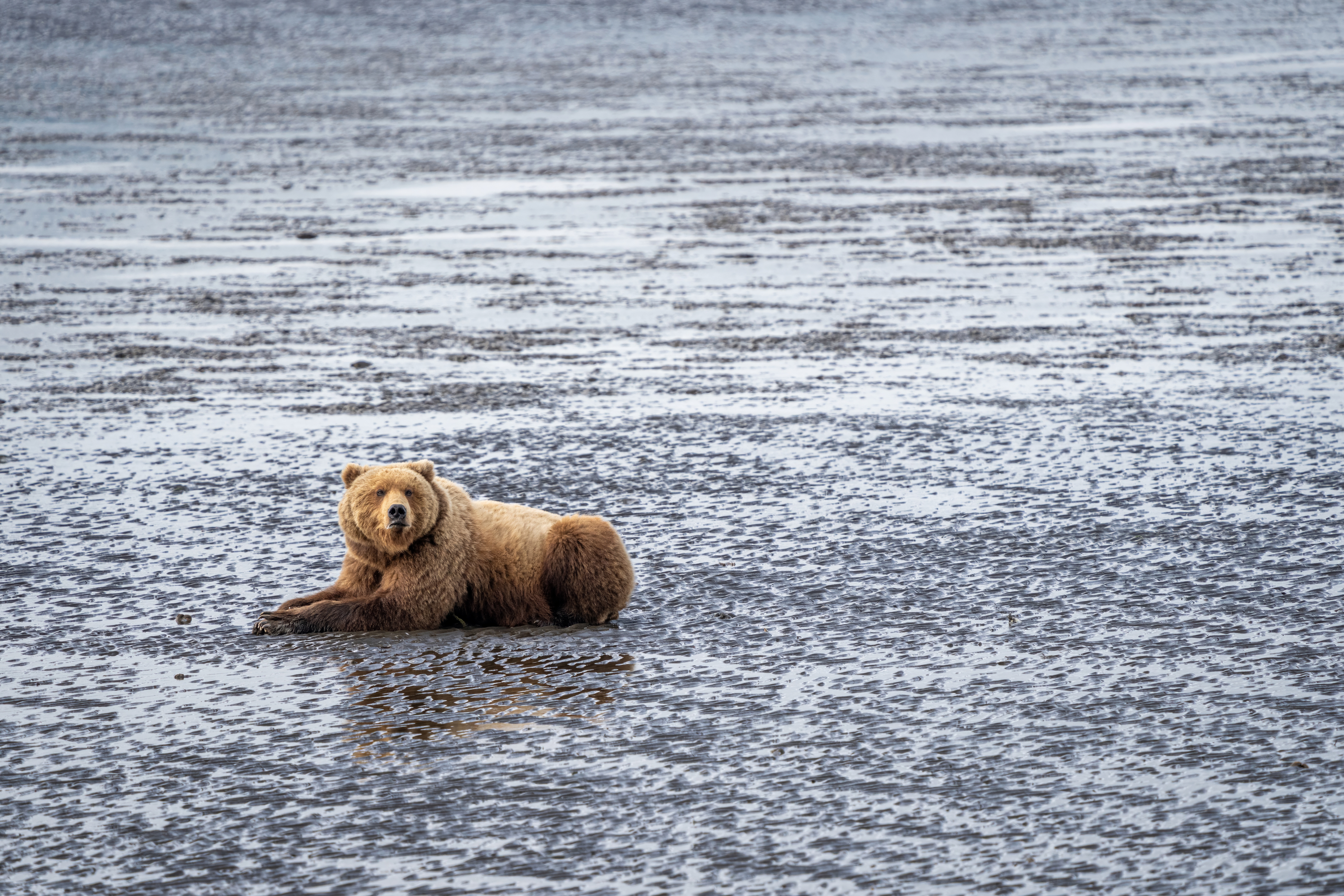
The Art of Nothing: Using Negative Space in Wildlife Photography
There is a moment in every photographer’s life when you realize you’re stuck. You’ve been chasing the subject. Zooming tighter. Filling the frame. Getting closer, closer, closer until your photo is basically an eyeball with fur around it. And sure, that works. Wildlife enthusiasts love a good portrait. The eyelashes. The whiskers. The intimate moment. But at a certain point, those photos all look the same. Is your photography really just relying on the price of a large zoom lens?
Sometimes the real power of an image comes from doing the exact opposite of zooming in. Sometimes the secret is… nothing.
A lot of nothing.
Negative space is the art of letting empty space carry the weight of the photo. Snow, sky, rock, water, sand, fog. All the stuff that looks like “nothing” at first glance. When used well, it gives your subject context, scale, and drama. When used poorly, it just looks like you missed the shot.
Today we’re aiming for the first option.
What Is Negative Space Anyway?
Negative space is simply the empty area surrounding your subject. Think of it like silence in music. The pauses between the notes. Without those quiet moments everything becomes noise. Same with photography. If every pixel is shouting for attention, the viewer has no idea where to look.
Negative space solves that problem by creating breathing room for the eye. It isolates the subject and tells the viewer exactly where to see what matters. In other words, instead of screaming, your image whispers. But sometimes a whisper is a lot more interesting.
Many creative approaches in photography rely on isolating subjects or emphasizing form and composition rather than simply documenting what is there. Techniques like abstraction often focus on similar ideas, highlighting shape, pattern, and simplicity rather than obvious storytelling.
Negative space lives in that same neighborhood. It simplifies. It distills. It lets one small thing carry the entire story. Let’s look at how that plays out in the field.
Example 1: Polar Bear in a Sea of Snow
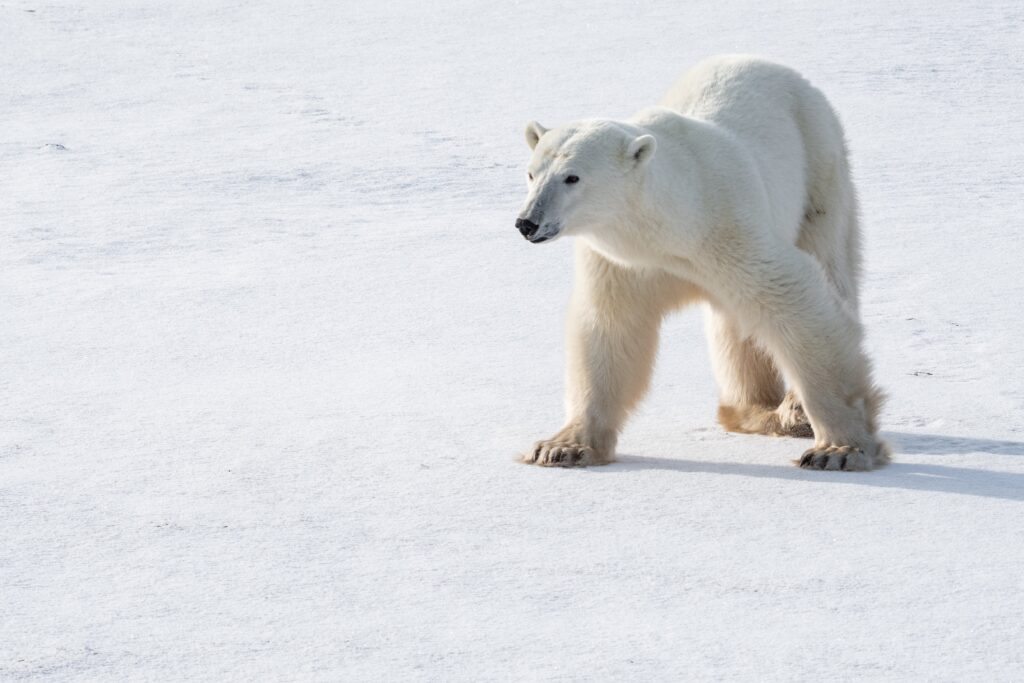
There are few places on Earth that do negative space better than the Arctic. It is a vast, blinding, frozen minimalist painting. White snow. White sky. White ice. Occasionally interrupted by something alive.
Which makes the polar bear a perfect subject. Most people’s instinct when they see a bear is to zoom in and fill the frame. That’s understandable. Bears are large. Bears are charismatic. Bears have excellent marketing departments. But try something different. Zoom out. Let the bear become small. Let it wander across a giant field of white snow with nothing else in sight.
Suddenly the image changes completely. The bear stops being just an animal and starts becoming a symbol. A lone traveler in an endless frozen world. A reminder of how harsh and massive that landscape really is.
A couple practical tips when shooting a scene like this:
- Expose carefully: Snow will trick your camera into underexposing the scene. Your polar bear will turn into a gray blob if you are not paying attention. Use exposure compensation and brighten the image so the snow stays white.
- Place the bear off center: If the bear sits dead center, the photo feels static. Move it toward one edge of the frame. Give it room to walk into.
- Embrace the emptiness: The hardest part mentally is resisting the urge to crop. Trust the negative space. Let the Arctic feel big.
Example 2: Bighorn Sheep on a Wall of Stone
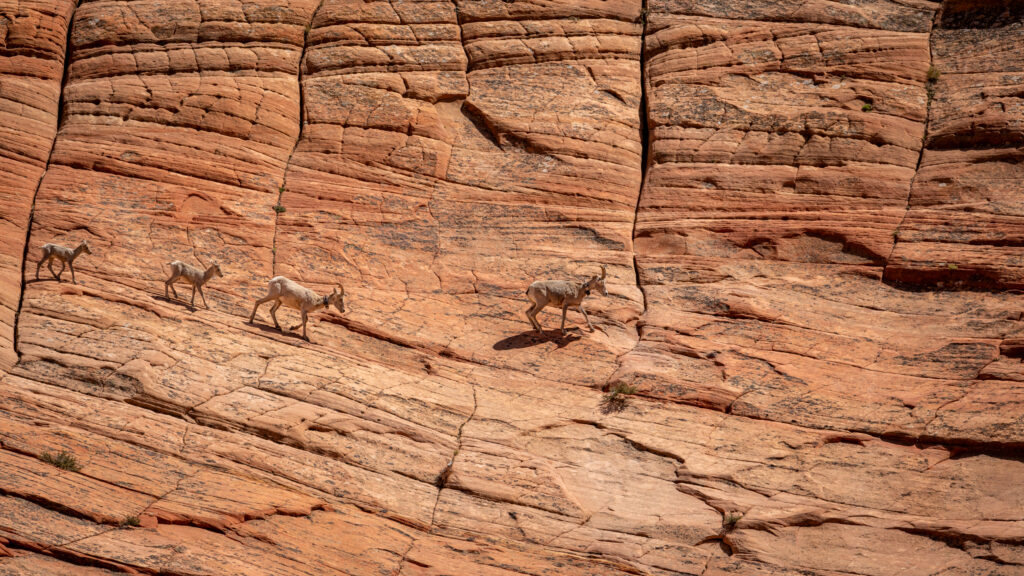
Desert landscapes are another fantastic playground for negative space. Imagine a massive sandstone cliff face. Rust colored rock stretching across the frame like the side of a cathedral. And then, way off to the side, a bighorn sheep clinging to the slope like a stubborn little mountaineer.
If you zoom in tight, the photo becomes a standard wildlife portrait. But if you step back and let that rock dominate the frame, suddenly the story changes. Now the photo is about scale. The sheep looks small. The rock looks enormous. The viewer feels the weight and texture of the environment. This works particularly well when the background has strong patterns or texture. Rock walls, sand dunes, glaciers, or cliffs can all become powerful negative space because they add visual interest without competing with the subject.
Some field tips for this kind of shot:
- Look for contrast: A light colored sheep against dark rock, or vice versa, helps the subject stand out from the empty space.
- Use longer focal lengths: Telephoto lenses flatten the perspective and isolate the subject against the large background.
- Wait for separation: Make sure the sheep is not overlapping with cracks, shadows, or distracting shapes in the rock. Think of the background like a giant canvas. The animal is the brushstroke.
Example 3: A Bird in an Endless Sky
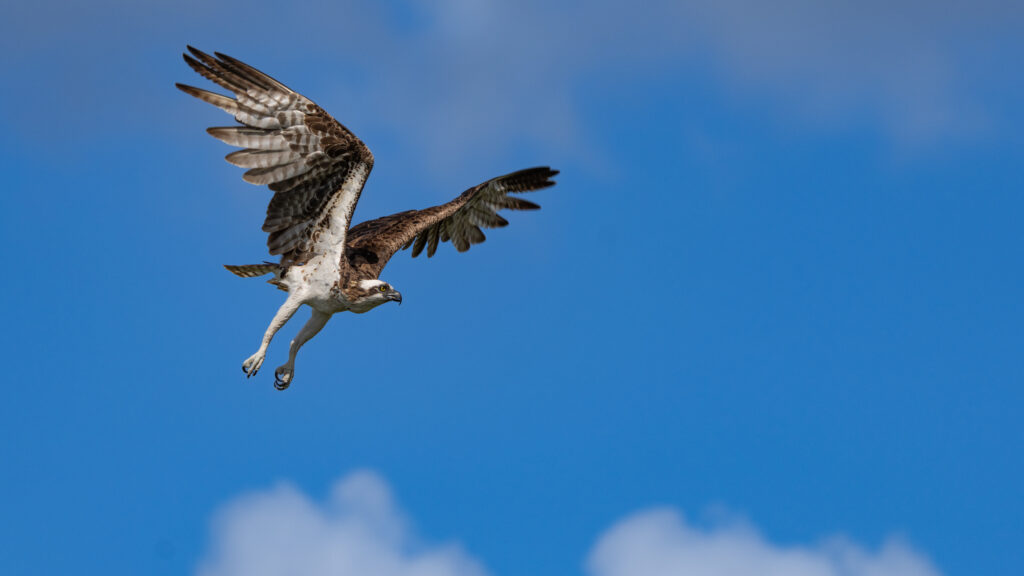
This one might be the purest example of negative space you’ll ever find. A bird in the sky. That’s it. No trees. No mountains. Just sky.
Most photographers will instinctively track the bird and try to fill the frame. That leads to classic bird photography shots with wings stretched edge to edge. But if you intentionally leave a large amount of sky around the bird, the photo becomes something else entirely. Now the bird feels like it is floating in infinity. It emphasizes freedom. Movement. The sheer scale of open air.
A few practical tips:
- Use simple backgrounds: Clear skies work best. Busy clouds can destroy the minimalism of negative space.
- Leave space in front of the bird: If the bird is flying left, leave empty sky on the left side of the frame. It gives the subject somewhere to go.
- Think small: The bird might only occupy five percent of the image. That is the point.
Training Your Eye to See Negative Space
The hardest part of this technique is mental. Our brains are wired to zoom in. So here is a simple exercise you can try next time you are in the field. When you see an animal, take two photos.
- First photo: fill the frame.
- Second photo: zoom out and leave tons of empty space.
Later, when you review the images on your computer, compare them. You will be surprised how often the second photo feels stronger, calmer, and more artistic. Negative space is not always the right answer. But when it works, it works beautifully.
Final Thoughts from the Field
Photography often rewards patience and a willingness to break the obvious rules. Negative space is one of those tools that feels counterintuitive at first but becomes addictive once you start seeing the possibilities.
If you want to practice this technique in one of the best environments on Earth, the Arctic is hard to beat. On a Natural Habitat Adventures polar bear photo expedition in Churchill, the snowy tundra becomes the ultimate minimalist studio. A lone polar bear walking across the frozen landscape offers endless opportunities to experiment with scale, simplicity, and the quiet power of empty space.
Sometimes the most powerful thing in a photograph is not what you include. It is what you leave out.
Happy Photographing,


Leave a reply