Three Spectacular Ways to Capture the Monarch Migration
The annual migration of hundreds of millions of monarch butterflies is one of the most breathtaking natural phenomena in our wild world. While it may seem straightforward to capture photographically, it can be a challenge to portray its many sides all while being utterly mesmerized.
While joining a proper monarch migration photo expedition is a surefire way to get guidance on the many, many ways to photograph this spectacle, this article is intended to help you with some of the most iconic, and show stopping moments you’re likely to encounter.
Clusters of Monarchs in Trees
The “environmental portrait” of monarchs, as they cluster by the 10s of thousands, is no doubt one of the first scenes you will encounter. It’s also a core photo to showcase not only the extraordinary environment in which these migratory monarchs live, but of the phenomenon itself.
The key to this photo is the framing and composition. While the monarchs are virtually everywhere, think deliberately about which parts of the colony are most aesthetic and pleasing photographically.
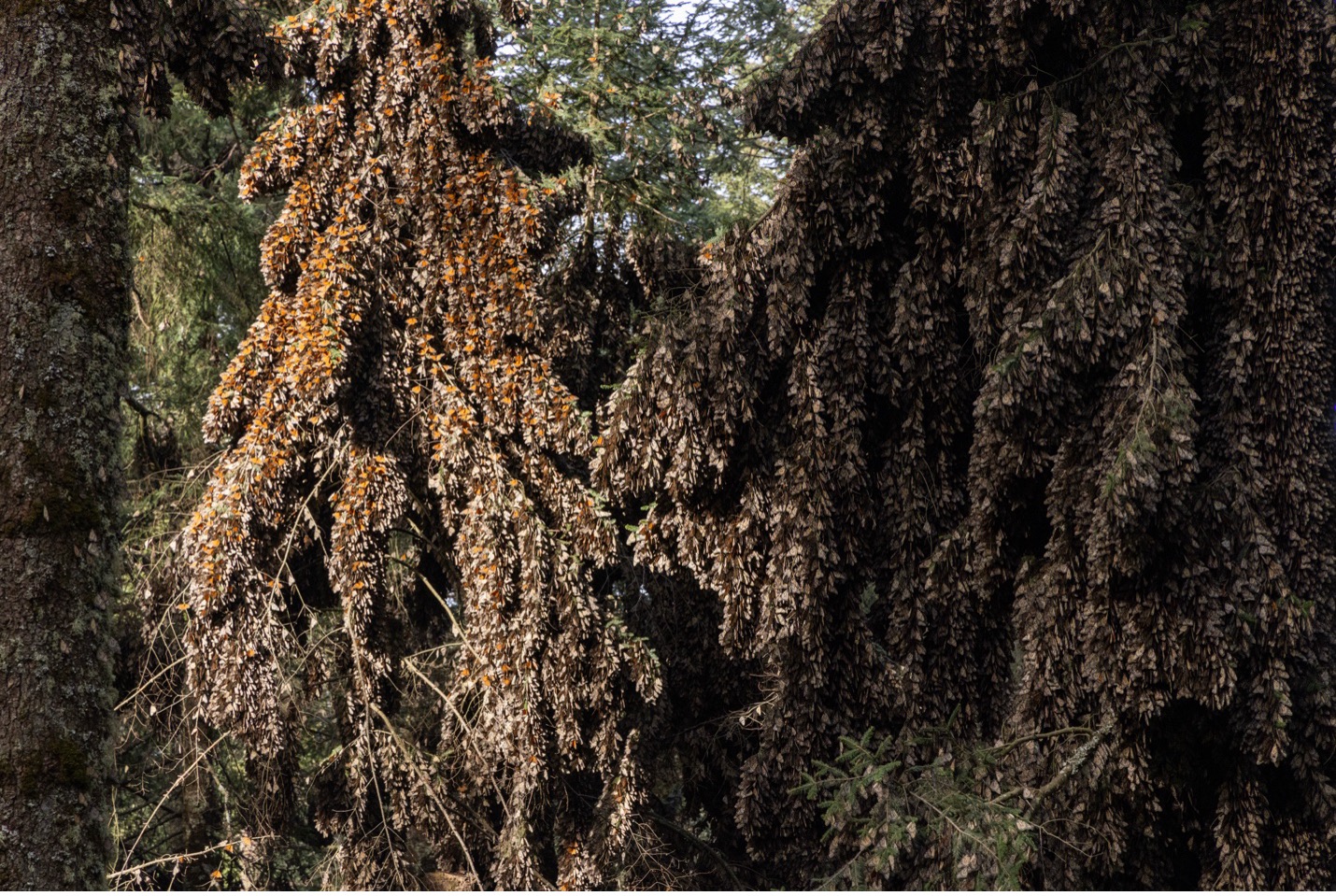
Light in the monarch colonies can be challenging, but is an essential consideration for these large, wide-angle shots. I personally look for areas of light gradients where bright areas melt into shadows, showcasing both lighting schemes, while minimizing harsh light and harsh transitions.
Backlighting can be wonderful, too, as you photograph into the direction of the sun. This means that you will get more silhouettes and light fringing around the clusters, but it can be a lovely way to really show the scene exactly as you see it.
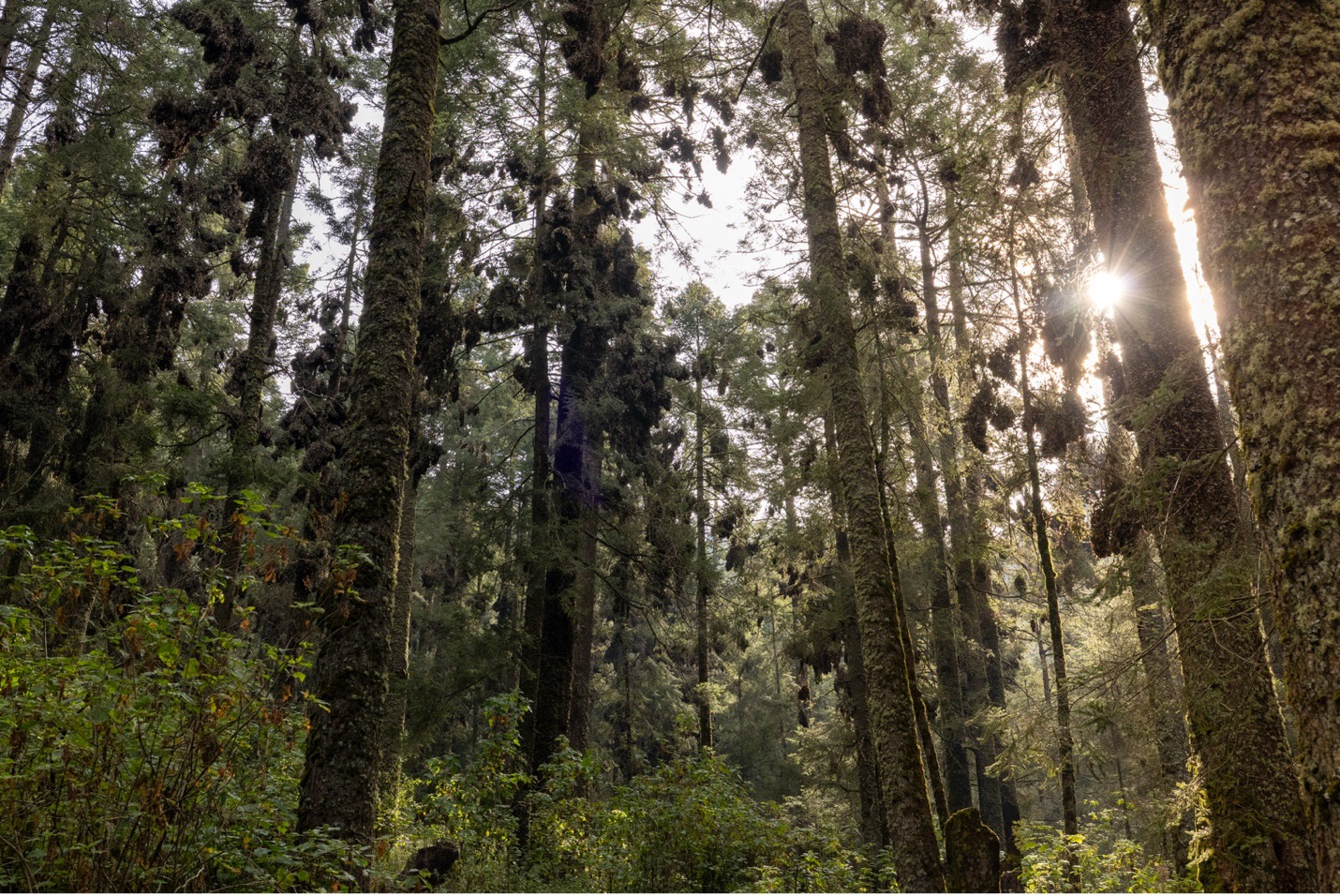
Think about traditional rules of composition, like the rule-of-thirds and ‘framing’ with natural features like tree trunks.
I generally like to photograph with a deep depth of field, so f/8 or f/11, but in cases where I can partially block the sun, f/16 or f/22 might render a bit of a star burst effect, which definitely gets you bonus points.
Be sure you keep an eye on your shutter speed and ISO, as the unexpected darkness in these colonies can quickly cause you to shoot at higher ISOs or slower shutter speeds without warning. I tend to expose for the brightest part of the scene, or simply underexpose my photo a bit to a) avoid hard highlights and b) allow me to ‘rescue’ overly dark areas in Lightroom with a bit of brightening in select areas.
Close-up on Flowers or Leaves
Although monarchs are not typically feeding much at this time of year, they will often land on, or climb upon, small shrubs or flower stalks to try and get a little nectar and/or gain some warmth by perching in a sunlit area.
Once here, they tend to be rather sedentary, which makes for a perfect close-up photo of individual monarchs.
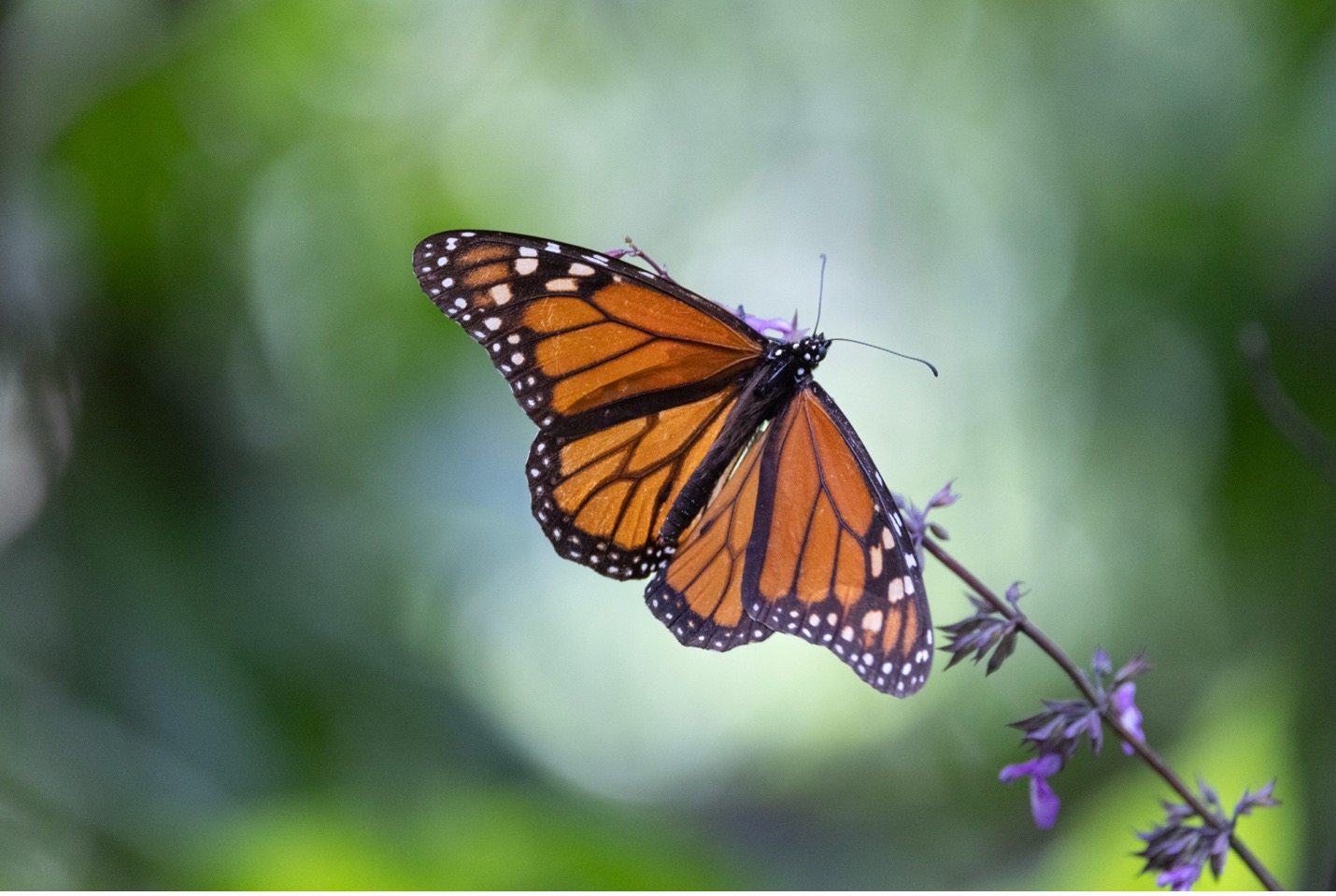
The trick for these types of photos is to be very deliberate about your background. I often phrase it as ‘choosing your background’ due to the fact that you can easily pivot around the butterfly, which has dramatic effect on the color, light, and texture of the background.
Is the background brighter than the subject, giving it a nice ‘halo’ effect as in the above photo? Or, should you shoot a bit wider and showcase the environment the individual butterfly is part of, as in the below?
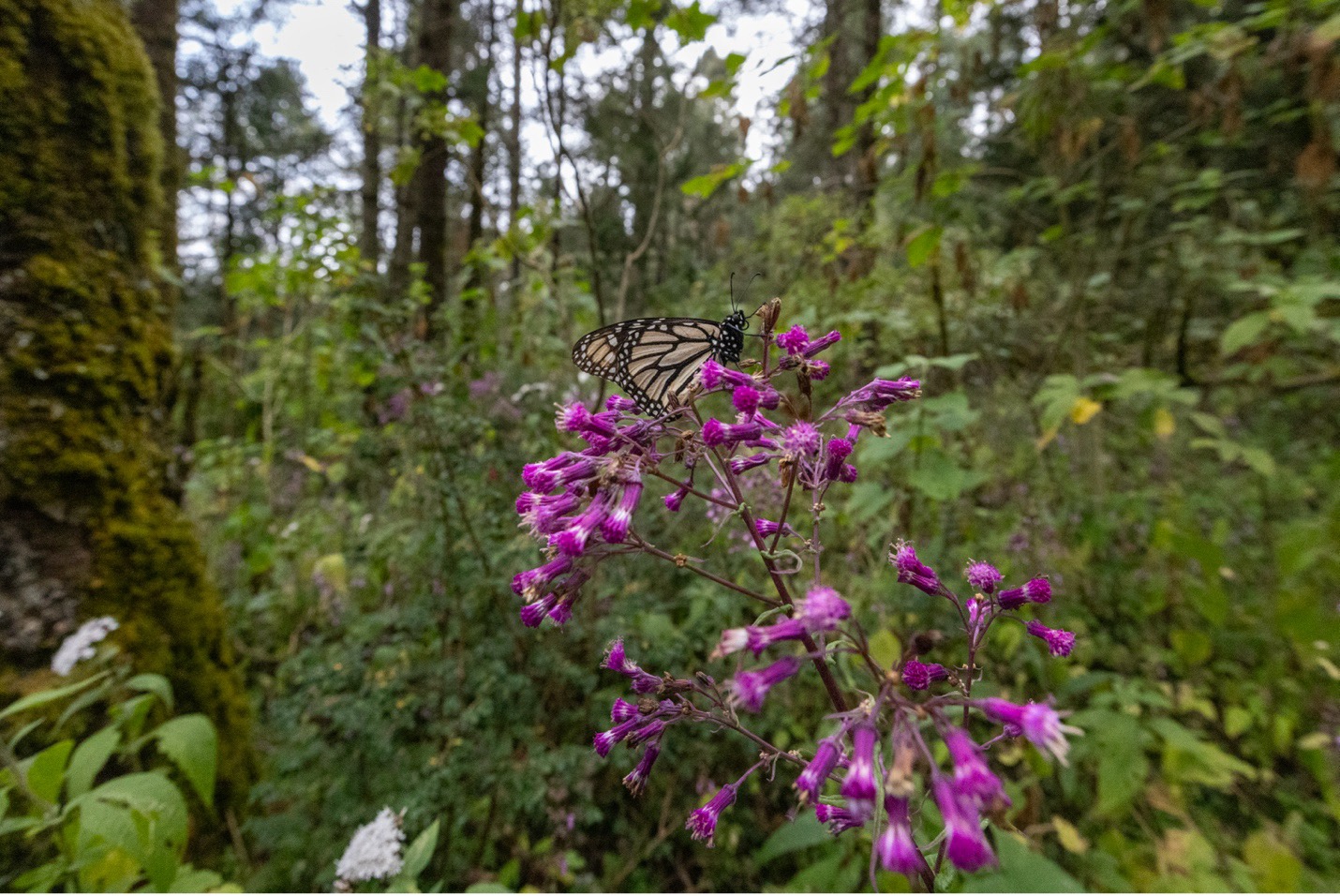
There is no ‘right’ or perfect way to execute this type of photo, and because of the plethora of these opportunities, the day is yours to experiment and try a variety of photos.
It helps tremendously if you are able to get ‘at eye level’ with the monarch so that you are composing the photo with a deep background. It is tempting to stay standing and to hover above the monarch for a quick and easy photo, but taking a minute to scope out the background, and perhaps even sit down next to the monarch, will pay dividends, as the eye-levelness of the photo is more intriguing and aesthetic to the viewer than a downward-angle photo.
Small Groups of Monarchs
While individual monarchs are of course beautiful, you will also see many, many in the same place and that’s truly special. As you explore the sanctuaries, pay particular attention to groups of monarchs—usually 10, 20, 50, or 100—that make for great photographs.
I am looking for a few specific ingredients that stand out.
First, I want these groups to be at eye level, for the reasons I discuss above. Second, I’d ideally like a background that is somewhat distant so that I can create that beautiful blur and separation between subject and background. And third, I want them in even lighting. That is, without harsh highlights. Oddly enough, groups of butterflies that are all in the dimly lit shade get preferential treatment from me vs. those that are in the bright, vibrant sun. The even lighting that shady conditions provide is less distracting and showcases the colors and textures of the butterflies better.
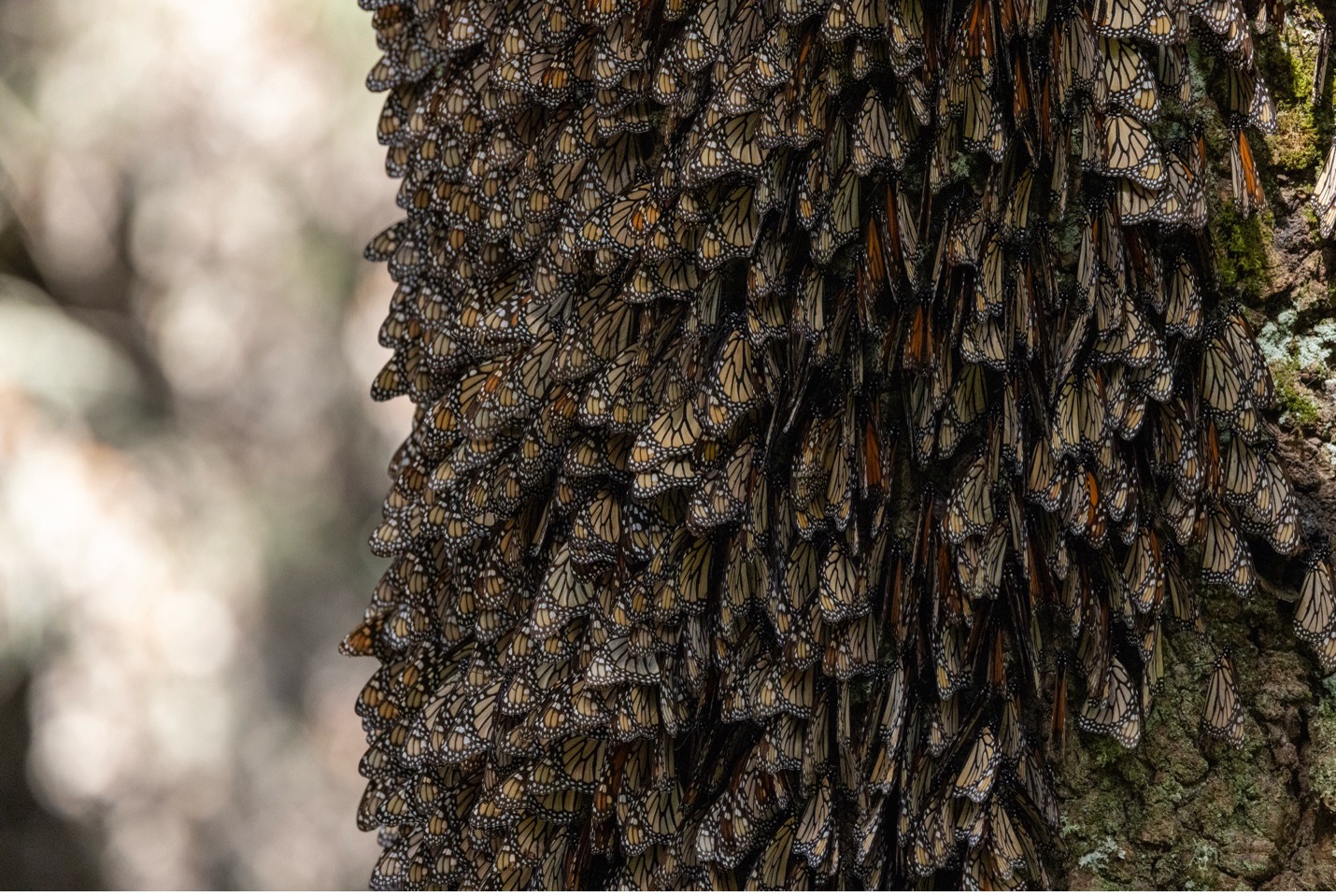
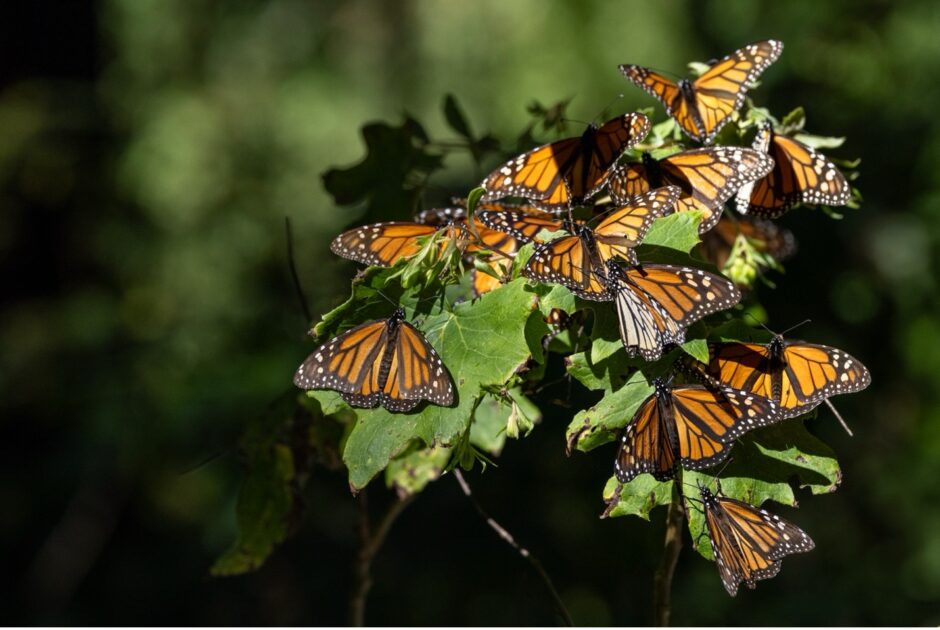
Common ways to pursue this type of monarch photo are to look for butterflies covering the tree trunks, as in the above, or grouped on small bushes as in the below.
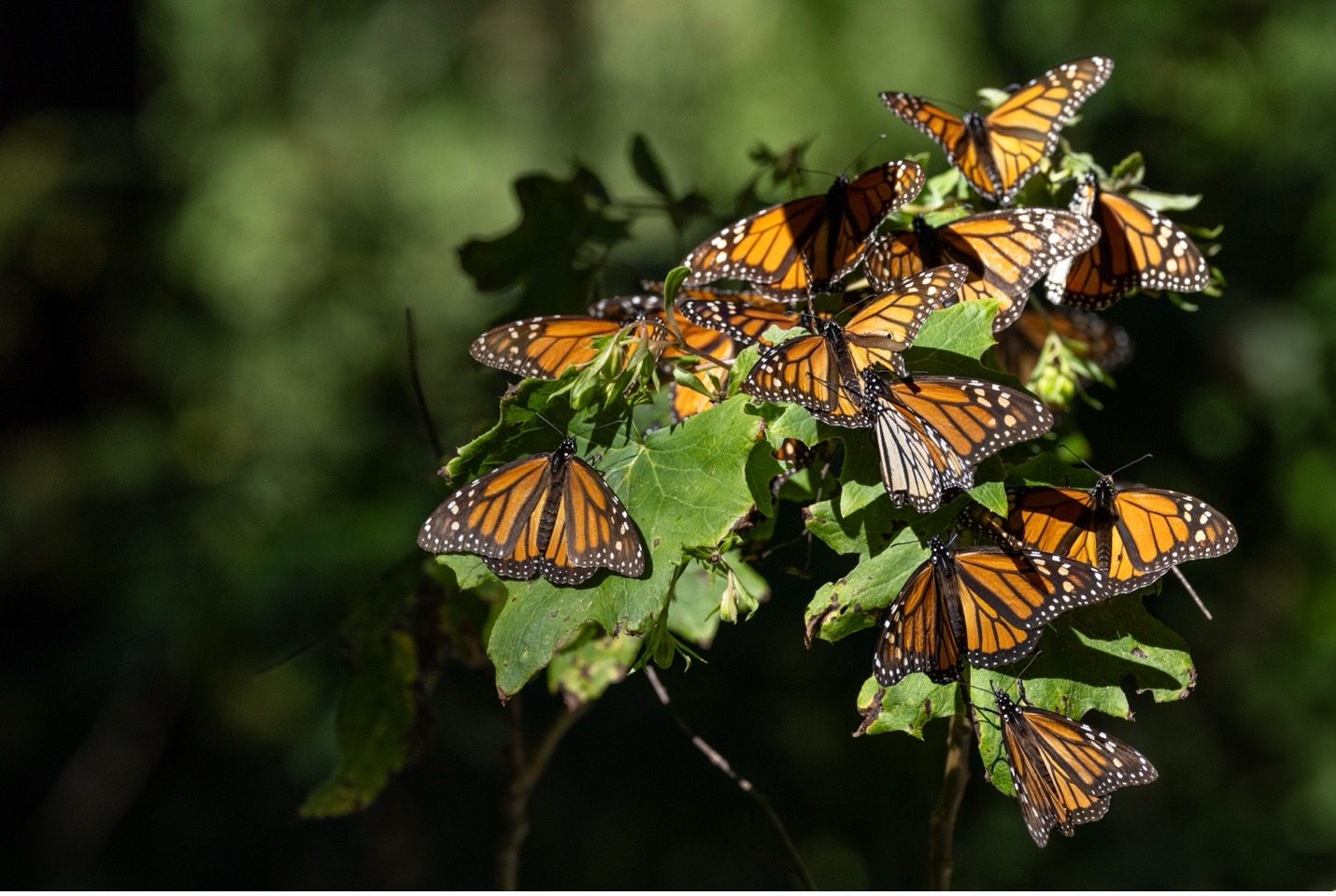
As you can see from the above photo, sunlit conditions do have their place in this style of photography, as the sun really helps bring out the colors of the monarchs. However, these yearn for a darker background to help center the viewers’ eyes on the subjects (i.e., the butterflies). Just like in the solo butterfly example, be ready to shift side to side to find that sweet spot where a shady, darker background presents itself.
In Summary
There are at least 45 other ways to photograph monarch butterflies in their overwintering home, but these three are among my favorites. And as you can see from the examples, even these three ‘categories’ of shots can have many different examples and significant variety in the way you envision them.
By prioritizing the all-encompassing environmental portrait, the solo butterfly photos, and groups of nearby butterflies, you will no doubt capture an amazing variety of photos of the monarch migration, while likely priming your creative vision to riff on each of these for the multitude of other photo opportunities in the kingdom of the monarchs!
Hope to see you there!

Court

Leave a reply